Wednesday, February 27, 2013

Investigating Life Cycles


The Caterpillar and the Polliwog

By: Jack Kent


Have you ever wondered why you get bigger as you get older, while some organisms completely change? With this book kids are able to learn about different life cycles of caterpillars and polliwogs. In the book, The Caterpillar and the Polliwog, it starts out stating that a caterpillar turns into a butterfly. Throughout the book the caterpillar brags to her friends “When I grow up, I’m going to turn into something else,” and keeps going on and on about how special she is because of it. The caterpillar soon realizes, after meeting the polliwog, that she isn’t the only one who will change into something else when she grows up. The polliwog had just received news from the fish that he would also make a transformation and when the caterpillar came strutting by he proceeded to tell her all about his life cycle. With much surprise, the caterpillar was distraught to find she wasn’t the only one who would complete a life cycle. After chatting for a while, they both began to see only the similarities in their life cycle and thought they would both transform into a butterfly. The caterpillar agreed to go first and soon started spinning a cocoon. As the caterpillar became out of sight in her cocoon the polliwog sat patiently, day after day, and continued to watch. Finally there was activity in the cocoon and the caterpillar climbed out as a beautiful yellow butterfly. With much excitement, the polliwog leaped into the air to find he had made a transformation himself. He realized while he was watching, day after day, he didn’t notice the transformation he was also making.  He become startled when he soon realized that he wasn’t exactly a big beautiful butterfly, but he was a very handsome frog. Both realized that they had completed a different life cycle that transformed them into two different special organisms.

This Science content nonfiction book correlates perfectly with the standard: S2L1. Students will investigate the life cycles of different living organisms. a. Determine the sequence of the life cycle of common animals in your area: a mammal such as a cat or dog or classroom pet, a bird such as a chicken, an amphibian such as a frog, and an insect such as a butterfly. At the beginning of the story, the life cycle of the butterfly was given and the process of polliwog, tadpole, was shown throughout the story. All while keeping the students engaged in the story and excited for what was happening next with the transformations of both. Also, the book shows the differences in how the life cycles are both made. The butterfly starts out as a caterpillar and then has to spin a cocoon and lives inside until she was fully and beautifully made. Whereas the polliwog started out living in the pond and continued to live until he was fully transformed into a frog. Furthermore the big beautiful butterfly flew and the handsome frog hopped right along into their happy life.  Wouldn’t you say that in this story this is the only time it’s safe to say, I know exactly what I’m going to be when I grow up?


“I enjoyed reading this book because of the humorous approach to learning about life cycles. Students can compare and contrast the different life cycles given in the book.” – Mallory


“The book used great illustrations for showing the life cycles of both the caterpillar and a polliwog. Younger kids would be intrigued and excited to listen and read to a fun book dealing with science!” -Dianne


Wednesday, February 20, 2013

1 x 1 = FUN


Bats on Parade
by: Kathi Appelt
             This poetry book emphasis multiplication sentences page by page, while the marching bats are on parade. First there is one drum majorette leading the parade and this showed 1 x 1= 1. Next came piccolos “piping in twos” which showed the two sets and number sentence 2 x 2= 4.

“Next came the flute players all in a line.
They marched three by three- which comes out to 9.”

After came the clarinets, four by four, and then the saxophones five by five. Later came a drum corps collection in rows six by six followed by forty nine trumpets which represented 7 x 7= 49. Sixty four French horns were lined up eight by eight, while eighty one trombones following behind.

“The crowd was bedazzled at what they saw
then- 100 sousaphones marched ten by ten.”

All together they marched with 385 members. At the end of the book the product of each multiplication sentence is added together to get the sum, which is 385.

                The Common Core Georgia Performance Standard that corresponds with Bats on Parade is:
MCC3.OA.3 Use multiplication and division within 100 to solve word problems in situations involving equal groups, arrays, and measurement quantities, e.g., by using drawings and equations with a symbol for the unknown number to represent the problem.1

This standard is first modeled in the book by having the students use the words to figure out the number sentence to match the riddle given on each page. For example the students would be given this quote from the book and would have to find the product and write the number sentence to match.

“Up marched the saxophones,
All _____-
Sopranos and altos,
They came five by five”
Next students could match the equal groups or arrays with the multiplication sentence given. With the example from above, the students would need to model five rows with five different things in each row. This book works great with multiplication and could also work well division through working backwards from the product.

“This is a great book to integrate multiplication concepts and the elements of poetry!” - Dianne

“I really like how the book incorporated music, math, and poetry! As a teacher you can use this book to cover all three subjects with integrated curriculum.” - Mallory  

Wednesday, February 13, 2013

A Helping Paw

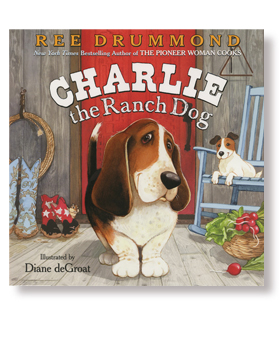
Charlie the Ranch Dog
By: Ree Drummond

              Have you ever had a pet that was always be your side?  Or have you ever wished your pet could lend a helping hand?  In this fantasy fiction book set on ranch, Charlie is always helping out in any way possible. Charlie’s biggest problem is that he loves to sleep and be lazy while continuing to help. Suzie who is Charlie’s best friend is very energetic and also loves to help around the ranch. Suzie is usually swift and on her paws with getting the task accomplished that Charlie often falls short of. Although Charlie usually gets beat with being the first to the task, his talent of being lazy does come into play later in the story.  
              The first and main element that makes this a fantasy fiction is Charlie the talking dog. This first-person narrative is used to give his view of the situation.  As the protagonist, he discusses his constant struggle with Suzie, the antagonist, with getting the job done first.  The plot thickens when Charlie falls asleep and misses important happenings taking place on the ranch. In his constant struggle to be first on the job, the theme shows young children that it’s not always about being first that matters, it’s about being helpful and patient in life. The style is written to the way a child would think with constant setting changes. Also this makes the young children engaged in the book while keeping their focus.  Throughout this book irony is used through the text and also through the illustrations. “After breakfast I usually go help mama in her vegetable garden. Mama loves her garden.  I don’t really understand all the fuss. I’d prefer a bacon garden myself. But I go ahead and lend a hand anyway.” In order to find out how Charlie's talent comes into play, you might just have to go and read yourself!


“This is a great book for teaching a moral in a fun way. Just about everyone in their life has wished they had a talking pet and younger children want a pet at this age. And who doesn't love a good story about a sweet loving dog.”-Dianne

“I enjoyed reading this book because of the style it was written to make it fun to read to younger children with wonderful expression. I also think it would expose children to a different rural culture that some children living in the city may not experience.”-Mallory